
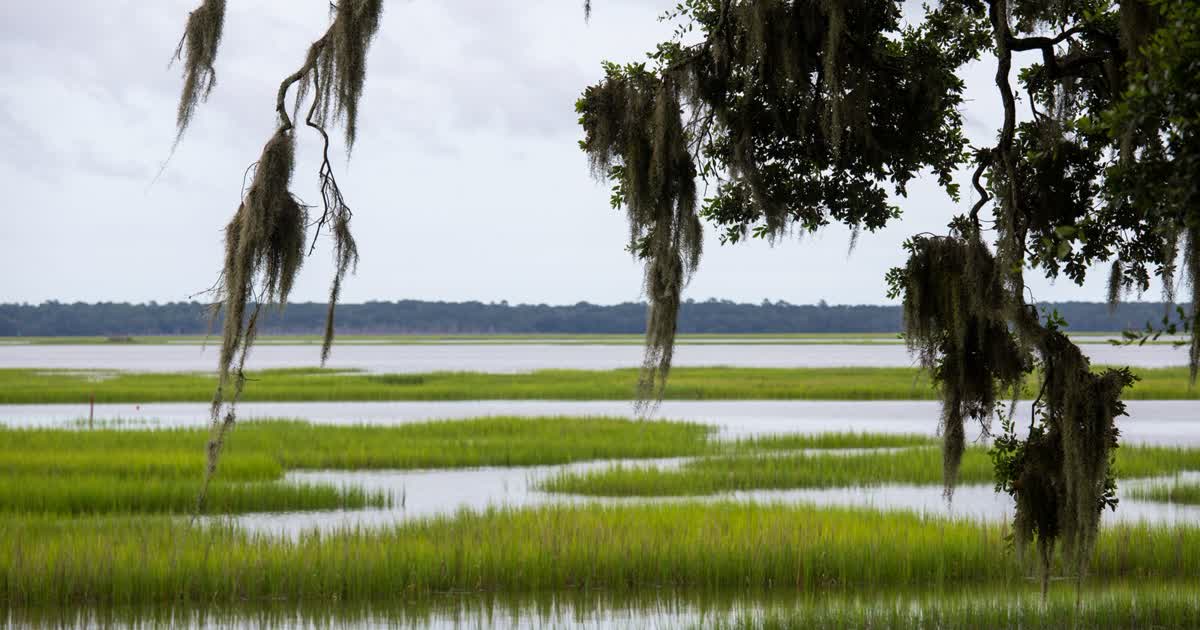
Bluffton has more than doubled in size in a single decade. The Census counted 12,530 people here in 2010 and 27,716 in 2020, and the Census Bureau's latest estimate is 36,807 as of July 2025, about a third larger than the 2020 count. Across the bridge, the Hilton Head Island-Bluffton Chamber reports 2.98 million visitors to the island in 2023.
Now think about what that means if you own a plumbing company, a dental office, a landscaping crew, or a restaurant here. Many of the people who will need you this year are new to the area. They don't have "a guy" yet. They have a phone and a search bar.
That's the opportunity. The frustrating part is that most local SEO advice is written for a generic city, not a place shaped like this one. I already covered the universal checklist in SEO Basics That Actually Move the Needle for Local Businesses. This post is about the parts that are specific to Bluffton and the Hilton Head area, and about the advice you can safely skip.
How Google Decides Who Shows Up "Near Me"
Google is refreshingly direct about this. Its Business Profile help page says local results are based mainly on three things:
- Relevance: how well your profile matches what the person searched for.
- Distance: how far your business is from the person searching.
- Prominence: how well known you are, which Google ties to things like reviews, ratings, and links from other websites.
Here's how those play out around here:
- Relevance is yours to control. Pick specific categories, fill out every field, and have a real page on your website for each service you offer.
- Distance mostly isn't. The area is spread out: Old Town, Buckwalter, Sun City, Okatie, Hardeeville, and the island itself. A business with an address in Bluffton is simply a closer match for someone searching from Bluffton than for someone searching from the island. You can't argue with a map.
- Prominence is where a newer or smaller business can catch up, and it's mostly built through reviews.
So spend your effort on the two you can actually move: relevance and prominence. And be honest about the third.
Bluffton, Hilton Head, or Both? Pick Honestly
A common mistake is listing every town within an hour's drive as a service area and hoping Google gets the message. Google's service area page lets you list up to 20 areas and says to keep them within about two hours' drive of where you're based. It's there to help customers find you, and nothing on that page promises a ranking boost for filling all 20. Adding a town tells Google you'll drive there. Distance, as Google describes it, is still about where your business is located.
A short, true list beats a long, aspirational one. If you really work in both Bluffton and on the island, say so. If you've never had a customer in Beaufort, don't claim it because it sounds bigger.
The same rule applies to your website. A page for each area you genuinely serve can help, but only if you can write something true and specific on it: which neighborhoods you work in, what kinds of jobs you do there, how to reach you. If all you can do is swap the town name in a copy-pasted paragraph, skip the page. Google's spam policies call pages built just to rank for near-identical searches "doorway abuse," and city-swapped copies are an easy way to end up there.
For Newcomers, Reviews Are the Whole Track Record
When someone has lived here twenty years, they know who to call. When someone moved in last month, the only track record they can see is what strangers wrote about you on Google. That makes reviews one of the biggest levers a local business has right now.
The numbers back it up. BrightLocal's 2026 Local Consumer Review Survey (1,002 U.S. adults) found:
- 97% of consumers read reviews for local businesses.
- Google is still the top review source, at 71% (down from 83% last year).
- 47% won't use a business that has fewer than 20 reviews.
- 74% seek reviews written in the last three months.
- 80% say they're likely to use a business that responds to all of its reviews.
Twenty reviews is a reachable target for almost any small business, and recency matters too. That points to a simple habit rather than a big campaign:
- Ask right when the job is finished, while the customer is still happy.
- Send the direct review link so they don't have to search for you.
- Reply to every review, good or bad, in a calm and specific way.
- Ask steadily, a few a month, instead of once in a burst and then never again.
- Never buy reviews. It's not worth risking the profile you've built.
Residents and Visitors Search Differently
Bluffton and Hilton Head have two very different customer groups, and most businesses lean toward one of them.
Residents search for services: plumber, HVAC, dentist, landscaper, pest control. Often it's urgent and they're on a phone, so they want to tap a number and get a person. A fast answer wins this crowd, which is exactly the point of why the first company to respond gets the job.
Visitors search for restaurants, rentals, tours, and things to do, usually mid-trip and from a phone. For them, accurate hours, current photos, and clear directions matter more than anything on your website's about page. A tourist who drives twenty minutes to a place that was closed for a holiday can leave a one-star review, and that review sticks around long after the trip is over.
I don't have a chart of Bluffton's busy seasons, and you know your own calendar better than I do. The principle is simple though: update your profile for your busy stretch before it starts, not while you're in the middle of it. Google lets you set special hours for holidays. Use it.
Your Website's Job Is Smaller Than You Think
Your website doesn't need to be an SEO machine. For a local business, it needs to do a handful of things well:
- A separate page for each main service, not one long "Services" page that lists everything.
- Your town named naturally in the title, headings, and body, like "Licensed electrician in Bluffton, SC." Not "Bluffton Bluffton Bluffton" stuffed into the footer.
- A phone number people can tap, at the top of every page, exactly matching the number on your Google profile.
- Fast loading on a phone. If it's slow, people leave before they see anything, which is covered in why a slow website costs you customers.
- One clear next step, which I break down in how your call-to-action buttons cost you customers and what belongs on your contact page.
- The same name, address, and phone number everywhere: your site, your Google profile, Facebook, and every directory you're listed in.
The AI Search Wrinkle
One more finding from that BrightLocal survey is hard to ignore: 45% of consumers now use ChatGPT or other AI tools for local recommendations, up from 6% last year. I wrote about the bigger picture in how to show up in AI search.
Much of what those tools surface seems to come from the same public sources Google uses: your profile, your reviews, and the text on your website. So the basics above cover both, and I wouldn't pay anyone for a separate "AI trick."
What You Can Safely Ignore
- Anyone selling "500 directory listings." A few accurate listings help. A blast of junk ones doesn't.
- Anyone guaranteeing page one. Google's own guidance says no one can guarantee a #1 ranking and warns you to be wary of anyone who claims to.
- A footer stuffed with every town in the county. Google's spam policies specifically name blocks of text listing the cities and regions a page is trying to rank for as keyword stuffing.
- A 20-town service area list for a business that works in two.
- A monthly retainer that can't tell you what it did last month. If you're paying one, here's a breakdown of what's typically inside one.
If You Only Have an Hour This Week
- Search your business name plus "Bluffton" and look at what Google shows. Fix anything wrong in your profile: categories, hours, services, photos.
- Check that your name, address, and phone number match exactly on your website, your Google profile, and Facebook.
- Send the review link to your last five happy customers.
- Reply to every review you haven't answered yet.
- Make sure the phone number on your site is tappable, and that each main service has its own page.
- In a month, look at your numbers with the four GA4 numbers that actually matter.
My Take
Local SEO in a fast-growing town isn't magic. It's boring consistency: an accurate profile, an honest service area, a steady trickle of real reviews, and a website that answers the question a stranger is asking. Nobody can promise you a ranking, and results take weeks to months, not days.
But the upside is real. Newcomers haven't picked a favorite yet, and Bluffton keeps getting more of them. The businesses that do the boring things well are the ones they'll find.
I build websites for local businesses in Bluffton and around Hilton Head. If you'd like a site that does the basics right from day one, see my web design in Bluffton, SC and web design in Hilton Head, SC pages, or just get in touch.